Evidence-based Male Fertility Support with
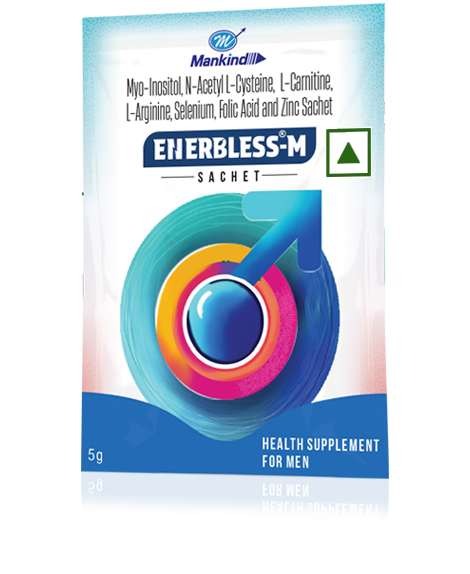
EnerBless-M Package

Male infertility is increasingly driven by oxidative stress, leading to impaired sperm quality and function. Antioxidant supplementation helps neutralise reactive oxygen species and support sperm health. Read More >

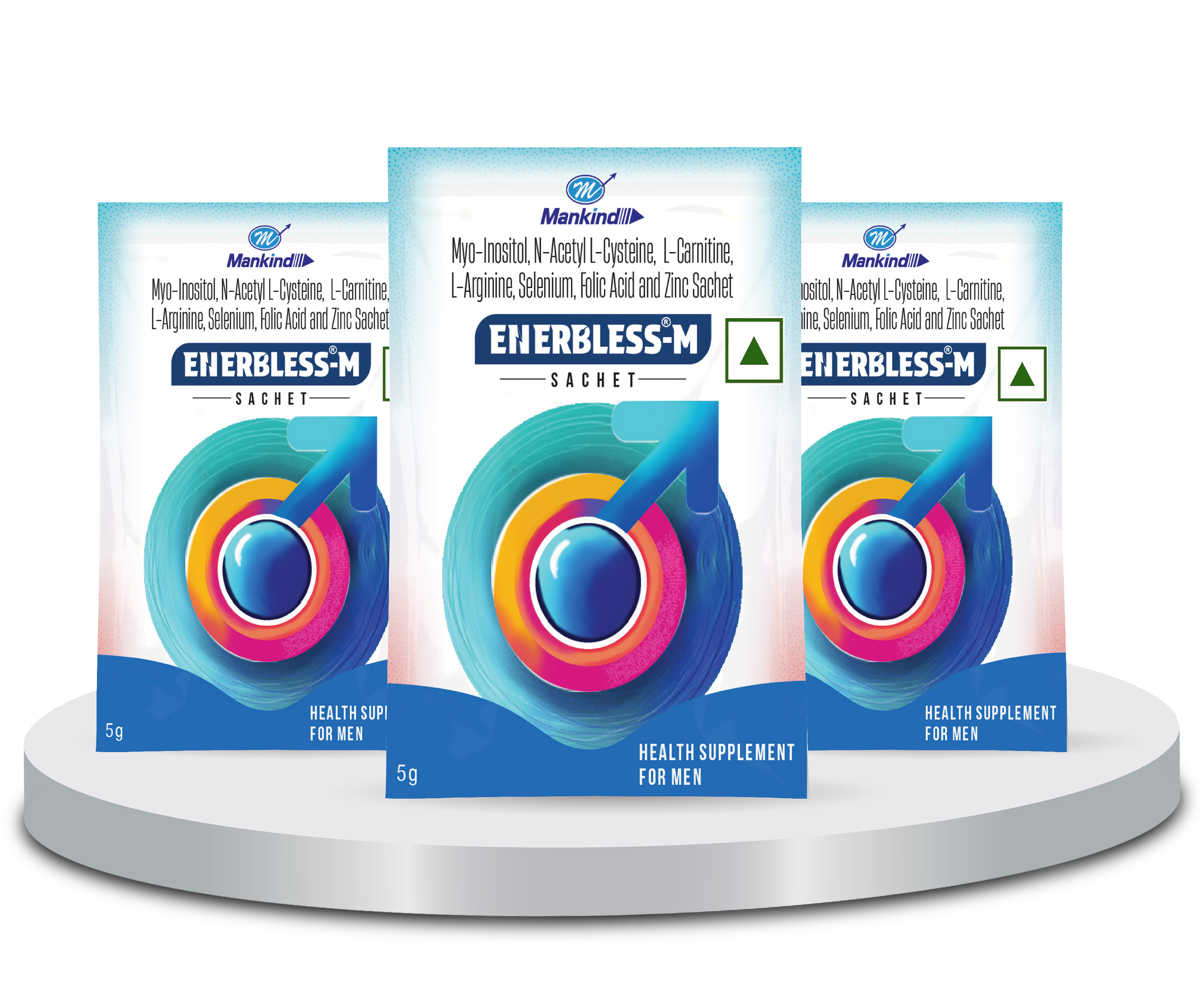
EnerBless-M Package

Key Active Ingredients1

Each ingredient is carefully selected based on clinical evidence and optimal bioavailability.

Myo-inositol

Supports mitochondrial energy production, potentially enhancing sperm motility through improved metabolic function.

N-acetyl L-cysteine

Acts as a precursor to glutathione, strengthening antioxidant defenses against oxidative stress that can impair sperm quality.

L-carnitine

Vital for mitochondrial fatty-acid transport and ATP generation. It improves sperm motility and reduces oxidative damage.

L-arginine

Serves as a nitric oxide precursor, improving blood flow and nutrient delivery to reproductive tissues; evidence in male infertility is mixed.

Selenium

A potent antioxidant trace element; it is shown to enhance sperm motility in infertile men.

Folic acid

When combined with zinc, it significantly improves sperm concentration and quality in subfertile men.

Zinc

Crucial for DNA/protein synthesis, antioxidation and spermatogenesis; supplementation with folic acid has improved sperm count and function.

How EnerBless-M Works1,2,3

Multiple mechanisms of action for comprehensive male fertility support.

Protein Degradation

It plays a key role in the identification and destruction of unfolded and misfolded proteins through endoplasmic reticulum-associated proteasome-mediated degradation.

Sperm Maturation

MI contributes to the maturation of spermatozoa as they transit through the epididymis, helping them acquire progressive motility and the ability to recognize the oocyte.

Sperm Capacitation

During capacitation, MI derivatives are involved in plasma membrane lipid raft redistribution and actin cytoskeleton reorganization, which are essential for sperm to develop full fertilising potential.

Hyperactivity Motility

MI derivatives play a role in the conversion of PIP2 to PIP3 and the PI3K-AKT pathway, which are involved in sperm hyperactivated motility, necessary for detachment from the oviductal epithelium and penetration of the oocyte vestments.

Sperm Guidance

Crucial for DNA/protein synthesis, antioxidation and spermatogenesis; supplementation with folic acid has improved sperm count and function.

Mode of Action of NAC3

Backed by extensive clinical research and peer-reviewed studies

Antioxidant Precursor

NAC is a precursor to GSH, a major intracellular antioxidant. It boosts GSH synthesis, which helps to neutralise ROS in seminal plasma.

Direct Free Radical Scavenging

NAC has a free thiol (-SH) group that directly scavenges ROS, reducing oxidative damage to sperm membranes and DNA.

Improves Sperm Parameters

Supplementation with NAC has been shown to:

  • Increase sperm count and motility
  • Decrease abnormal morphology
  • Improve chromatin integrity and reduce DNA fragmentation

Enhances TAC

  • NAC increases TAC in semen, which helps maintain a balanced redox environment essential for sperm function
  • Reduces lipid peroxidation
  • NAC lowers levels of MDA, a marker of lipid peroxidation, thereby protecting sperm membranes from oxidative damage

Hormonal Modulation

NAC may improve hormonal profiles by:

  • Decreasing FSH and LH
  • Increasing testosterone levels, which supports spermatogenesis

Improves Fertility Outcomes

Clinical trials have shown improved spontaneous pregnancy rates in couples where the male partner received NAC supplementation.

Antioxidant Therapy

A systematic review of antioxidant supplementation in male infertility shows consistent benefits across multiple studies.

L-carnitine in Sperm Function4

Supported by robust clinical research and peer-reviewed studies

L-carnitine Carnitine, particularly LC and LAC, is a water-soluble antioxidant that plays a crucial role in sperm metabolism and motility.
L-carnitine In vitro studies show that sperm cultured with carnitine exhibit higher motility and viability than controls.
L-carnitine Men with OAT have significantly lower levels of carnitine in their semen.
L-carnitine Cavallini et al found significant improvements in semen parameters and higher pregnancy rates in men with low-grade varicocele and idiopathic infertility treated with LC and LAC (21.8% vs. 1.7% compared to placebo).

Selenium in Sperm Health 5,6

Backed by extensive clinical research and peer-reviewed studies

Selenium is an essential trace element involved in spermatogenesis and protects sperm DNA from OS.

It functions through selenoproteins (over 25 types), such as GPX enzymes, which help maintain the structural integrity of sperm.

Selenium deficiency is linked to midpiece abnormalities and impaired sperm motility.

Safarinejad et al reported statistically significant improvements in all semen parameters after 26 weeks of treatment with 200 μg of selenium, alone or with NAC.

Zinc in Sperm Function 1,7

Supported by robust clinical research and peer-reviewed studies

Zinc in DNA and RNA metabolism

Zinc is essential for the metabolism of DNA and RNA, supporting cellular function and spermatogenesis.

Antioxidant and antiapoptotic properties

Zinc acts as a powerful antioxidant and has antiapoptotic effects, protecting sperm cells from oxidative damage.

Higher levels in fertile men

Seminal plasma zinc levels are significantly higher in fertile men than subfertile men.

Folic acid in Sperm Health7

Advanced treatments and lifestyle changes can help overcome male infertility

Role in Nucleic Acid and Amino Acid Metabolism

Folic acid is vital for DNA/RNA synthesis and amino acid metabolism, supporting cellular and reproductive functions.

Antioxidant Properties

Acts as a free radical scavenger, making it a potential antioxidant treatment for male subfertility.

Reduced Sperm DNA Fragmentation

Folic acid intake is linked to a lower frequency of SDF, improving sperm DNA integrity.

Genetic Impact

Daily intake of 700 μg of folic acid is associated with 30% lower risk of chromosomal abnormalities such as disomy X, sex nullisomy and DNA aneuploidy.

Mode of Action of L-arginine7,8

L-arginine is a semi-essential amino acid that serves as a precursor to NO, a molecule critical for vascular function, sperm motility and erectile physiology.

Abbreviations:

ATP: Adenosine triphosphate; DNA: Deoxyribonucleic acid; FSH: Follicle-stimulating hormone; GSH: Glutathione; LAC: L-acetyl carnitine; LC: L-carnitine; LH: Luteinising hormone; MDA: Malondialdehyde; MI: Myo-inositol; NAC: N-acetylcysteine; NO: Nitric oxide; OAT: Oligoasthenoteratozoospermia; OS: Oxidative stress; PIP2: Phosphatidylinositol 4,5-bisphosphate; PIP3: Phosphatidylinositol 3,4,5-trisphosphate; RNA: Ribonucleic acid; ROS: Reactive oxygen species; SDF: Sperm DNA fragmentation; TAC: Total antioxidant capacity

References:

1. De Rose A, Baldi M, Gallo F, et al. The management of male infertility: From nutraceuticals to diagnostics. Int. J. Med. Device Adjuv. Treat. 2018;1:e110.

2. Bashiri Z, Sheibak N, Amjadi F, et al. The role of myo-inositol supplement in assisted reproductive techniques. Hum Fertil (Camb). 2023;26(5):1044–60.

3. Zhou Z, Cui Y, Zhang X, et al. The role of N-acetyl-cysteine (NAC) orally daily on sperm parameters and serum hormones in idiopathic infertile men: A systematic review and meta-analysis of randomised controlled trials. Andrologia. 2021;53(2):e13953.

4. Ma X, Yang Y, Liu S, et al. Meta-analysis of the efficacy and safety of L-carnitine and N-acetylcysteine monotherapy for male idiopathic infertility. Rev Int Androl. 2025;23(1):1–12.

5. Michaelsen MP, Poulsen M, Bjerregaard AA, et al. The effect of dietary supplements on male infertility in terms of pregnancy, live birth, and sperm parameters: A systematic review and meta-analysis. Nutrients. 2025;17(10):1710.

6. Majzoub A, Agarwal A. Antioxidant therapy in idiopathic oligoasthenoteratozoospermia. Indian J Urol. 2017;33(3):207–14.

7. Parekattil SJ, Esteves S, Agarwal A, eds. Male infertility: Contemporary clinical approaches, andrology, ART and antioxidants. 2nd ed. Cham, Switzerland: Springer; 2020.

8. Zafar MI, Mills KE, Baird CD, et al. Effectiveness of nutritional therapies in male factor infertility treatment: A systematic review and network meta-analysis. Drugs. 2023;83(6):531–46.